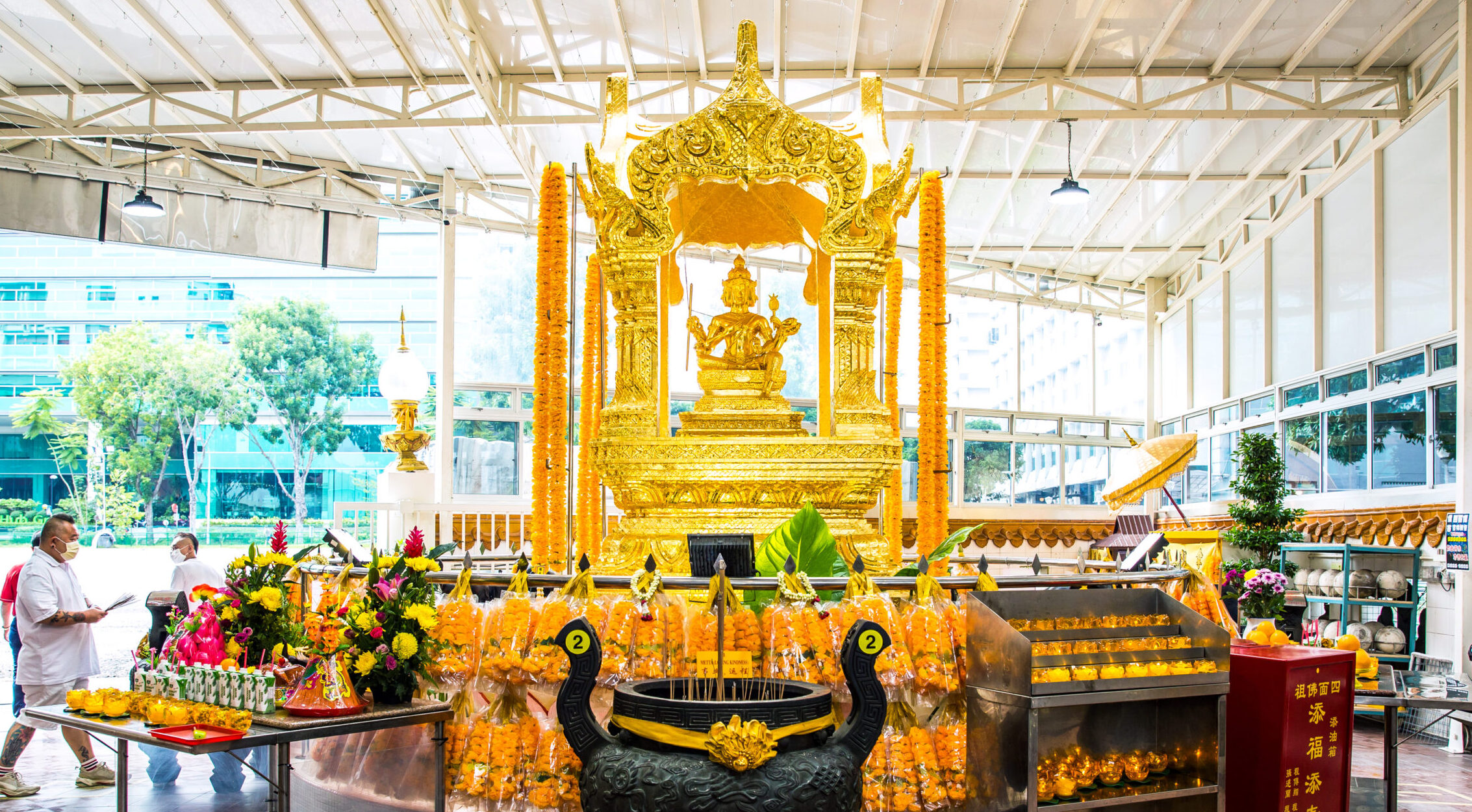
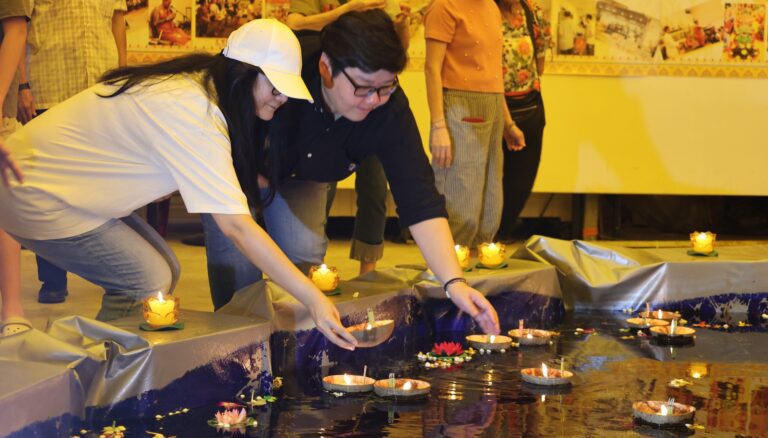
It is widely known that the Erawan Shrine in Bangkok is one of the most revered and popular places of worship in Thailand. Devotees firmly believe that the Four-Faced Buddha is highly responsive to sincere prayers, and when their wishes are fulfilled, many return to the shrine to offer thanks. According to records, the shrine was first established on 9 November 1956. Over time, this date has gradually come to be regarded by worshippers as the “birthday” of the Four-Faced Buddha.
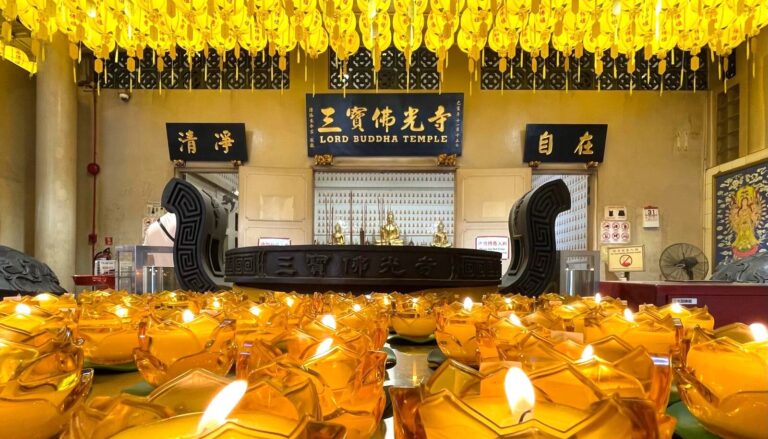
What is less widely known is that the Four-Faced Buddha enshrined at Lord Buddha Temple was cast from the same mold as the statue at the Erawan Shrine in Bangkok. Both statues were personally blessed by His Majesty King Bhumibol Adulyadej (Rama IX) of Thailand. This sacred statue was later respectfully invited to the temple by the temple’s founder, Layman Lim Chew Hock, and has since been enshrined as the principal deity, blessing countless devotees with compassion and wisdom. In light of the profound connection between the two statues, our temple also designates 9 November each year as the “Four-Faced Buddha Celebration,” marked by solemn and respectful ceremonies around this date, in honor of the deity and in prayer for the well-being, peace, and spiritual growth of all beings.
Each of the Four-Faced Buddha’s sides governs a different aspect of human affairs, which is why he is also revered as the “Wish-Granting Buddha.” The four faces symbolize career, relationships, health, and wealth—offering comprehensive blessings for all aspects of a devotee’s life. When making offerings, worshippers should approach the statue in a clockwise direction, paying respect to each face in order. Depending on their personal wishes, devotees may present offerings such as seven-colored flowers, traditional Thai dance performances, dance figurines, or wooden elephant carvings as acts of devotion. Prayers should be made with clear and specific intentions, and once a wish is fulfilled, devotees are expected to return and fulfill their vow as a gesture of gratitude and reverence.
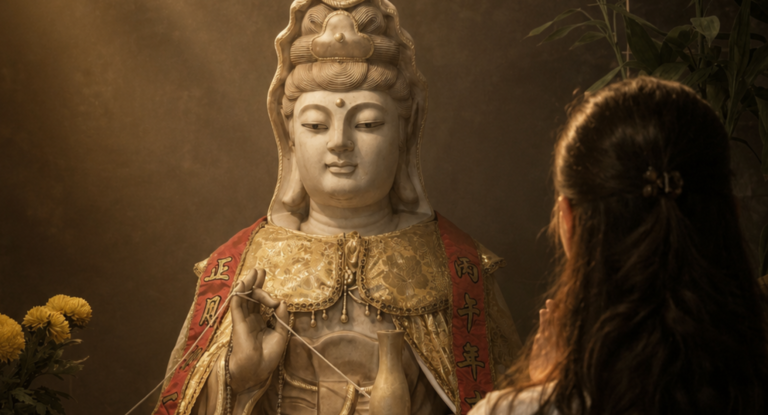
The19th day of the sixth lunar month commemorates Guanyin Bodhisattva’s Enlightenment Day, one of the most auspicious occasions in the Buddhist calendar.