三宝福田 从心而觅

Three treasures of blessing are found from heart

No products in the cart.

0
Gate
Four-Faced Buddha
四面佛祖

4

3

2

5

Corridor
Offering Counter


corridor
Rear Hall
后殿
Gate
Office
Entrance

UBI AVE 1

ARUMUGAM ROAD

11-station for worship

Circle Hall

The second to eighth worship stations of Lord Buddha Temple

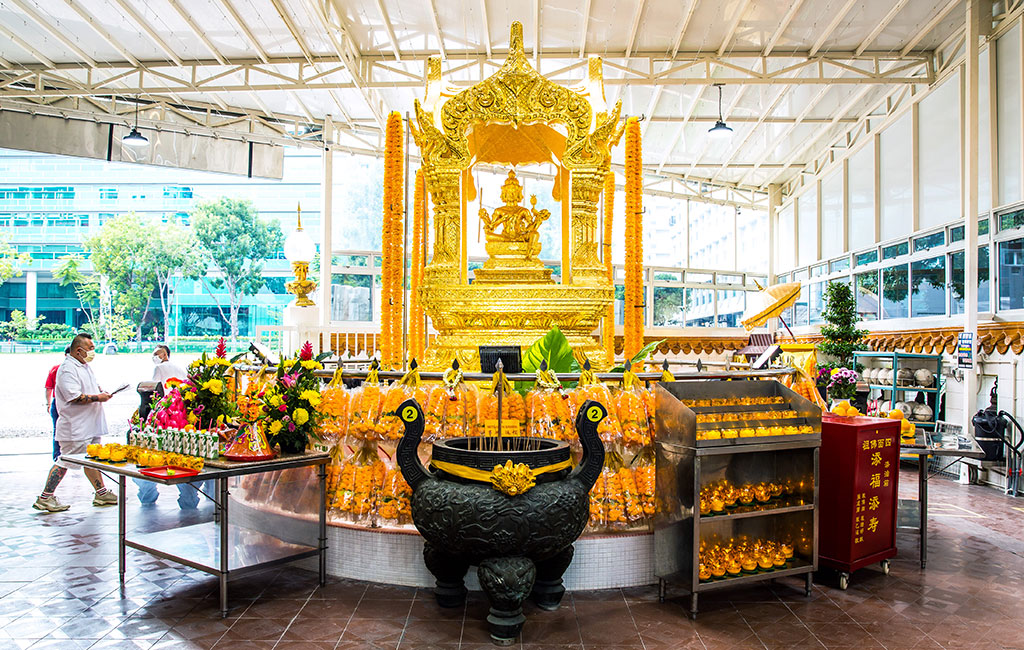
around the main deity of the temple, the Four-Faced Buddha.

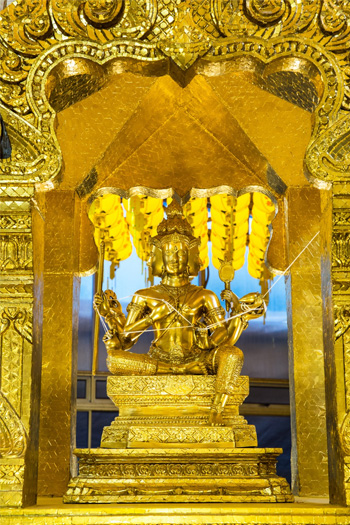
As many know, the Erawan Shrine in Bangkok is one of the most popular worship sites in Thailand, where devotees believe that the Four-Faced Buddha is extremely efficacious. When their wishes are granted after praying, many devotees return to express their gratitude to the Four-Faced Buddha. However, due to changing circumstances, not many are aware that the Four-Faced Buddha at Lord Buddha Temple and the one at the Erawan Shrine are from the same mold. Both statues were personally blessed by the ninth King of Thailand, Bhumibol Adulyadej. The Four-Faced Buddha at Lord Buddha Temple was invited by the temple’s founder, layman Lim Chew Hock, from Thailand to serve as the main deity of the temple.

The Circle Hall also enshrines Ganesha (the Elephant God), Sang Kat Chai, Earth God, Zen Buddha, and Datuk Gong.

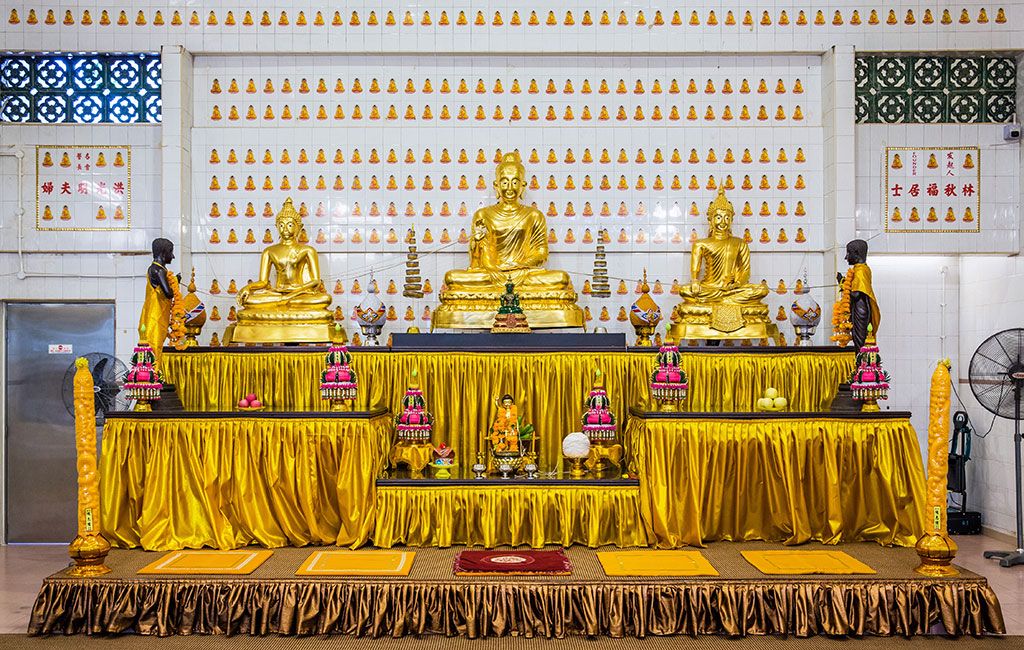
Main Hall

The first worship station is at the main hall
Buddha, Dharma and Sangha

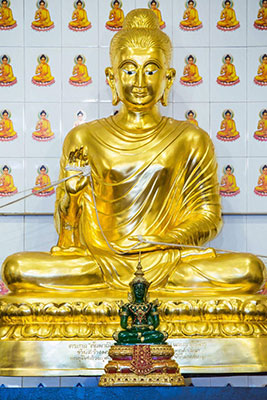
It is a place where monks come to worship and practice, and it is also a place where devotees gather to receive blessings. The main hall is dedicated to Shakyamuni Buddha, Gautama Siddhartha, and the Emerald Buddha. In the atmosphere of monks chanting daily, the main hall gathers the potential energy of the Three Jewels of Buddha, Dharma, and Sangha, making it even more pure.

Corridor

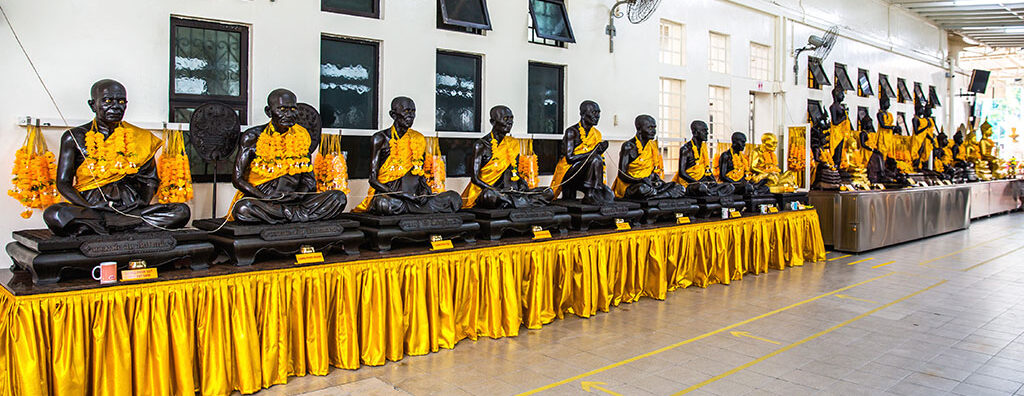
The ninth and tenth worship stations at the corridor of the temple
A must-visit place for pilgrimage

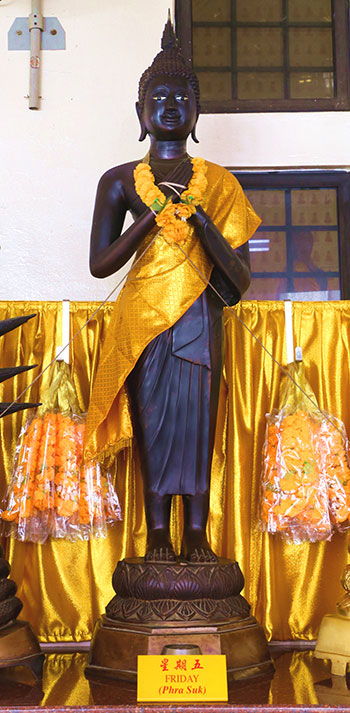
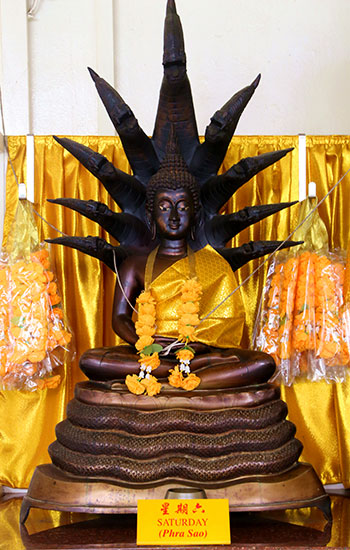
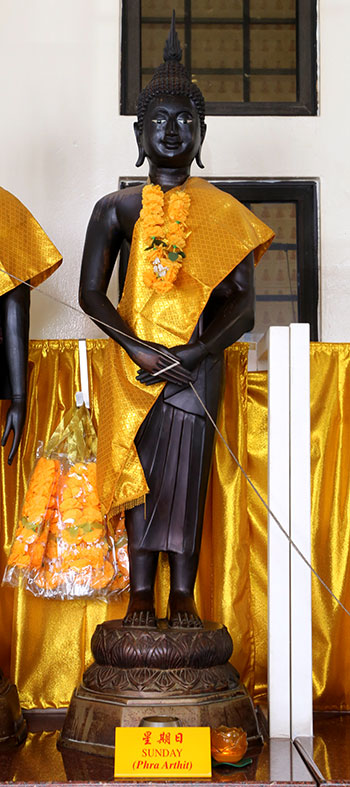
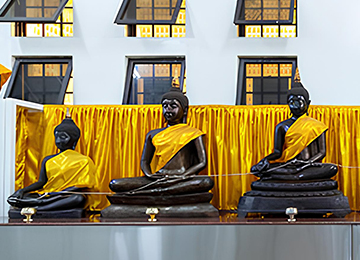
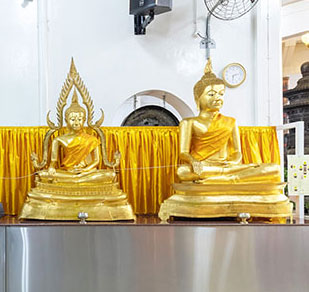
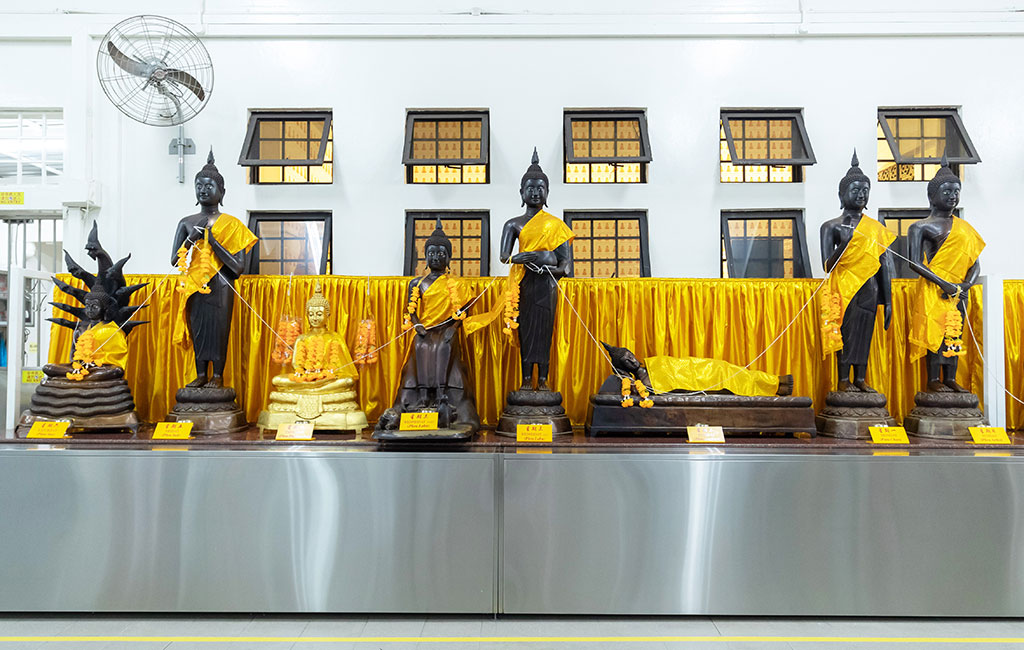
The 9th station enshrines the Shakyamuni Buddha, two Phra Chinnaraj, and the Seven-Day Buddhas (the legendary image of the Buddha practicing one week). Each of the seven-day Buddhas represents a different color. Find out the day of the week you were born and see which Buddha is blessing you.

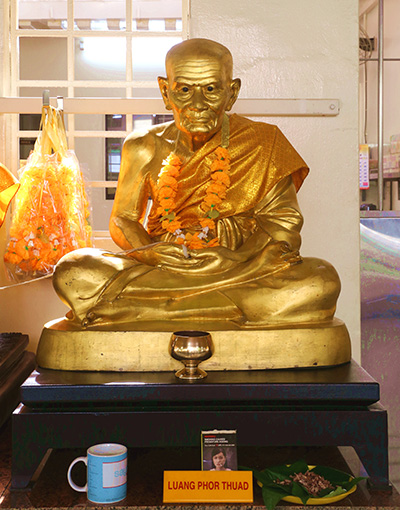
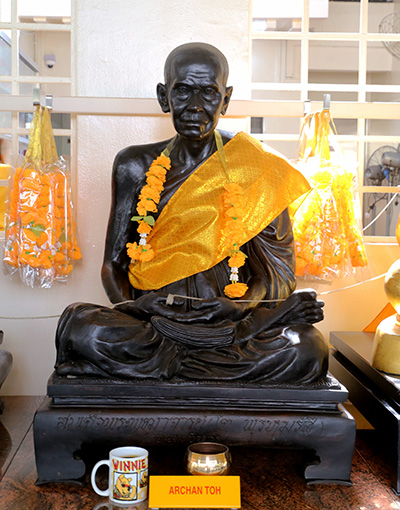
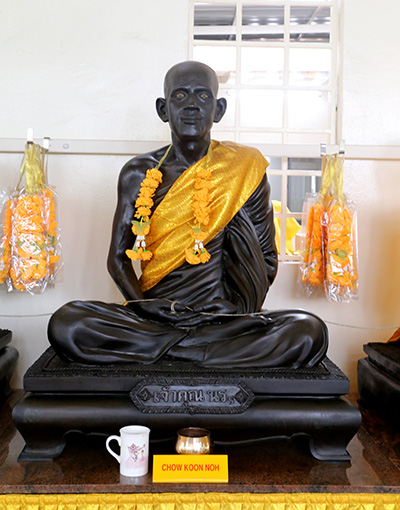
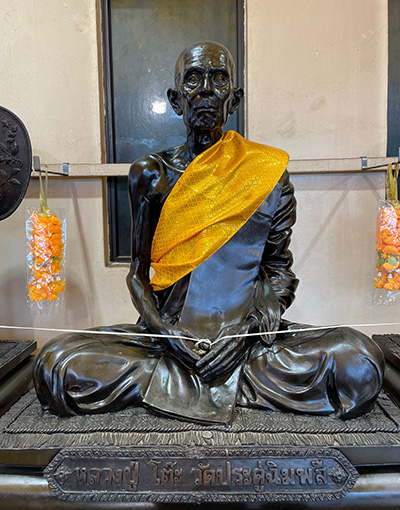
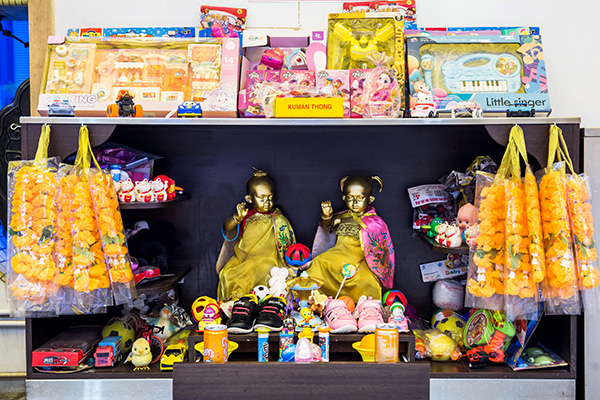
 The 10th station enshrines Thai eminent monks and a pair of Kuman Thong. The Sangha is one of the Three Jewels of Buddhism, serving as the transmitter of the Buddha’s wisdom and the messenger who cultivates good Dharma and merit to save all sentient beings. Currently, there are nine statues of eminent monks from Thailand in Lord Buddha Temple.

Rear Hall

The eleventh worship station, which is also the last station, is located in the rear hall.

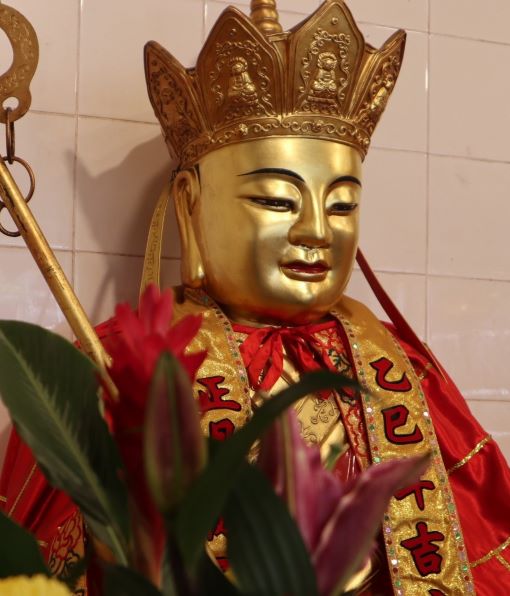
In the center of this hall are enshrined the Three Saints of Saha

Kṣitigarbha Bodhisattva, Shakyamuni Buddha, and Guanyin Bodhisattva

On either side of the hall are Phra Buddha Chinnaraj (referred to as the Success Buddha by the Chinese community as a sign of respect) and Phra Kate.


There are three Phra Buddha Chinnaraj statues in Lord Buddha Temple. Two of the statues are located at the end of the corridor—one features a water dragon, while the other does not. The third statue is situated in the rear hall and also features a water dragon.

Main Hall

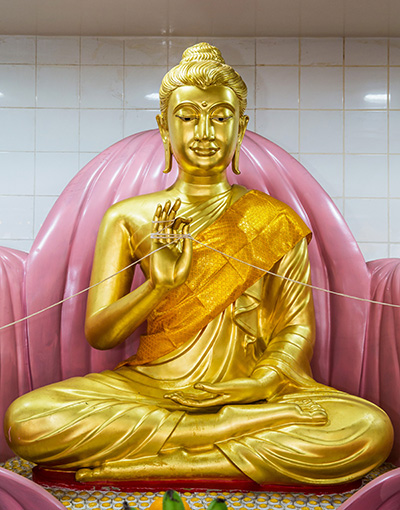
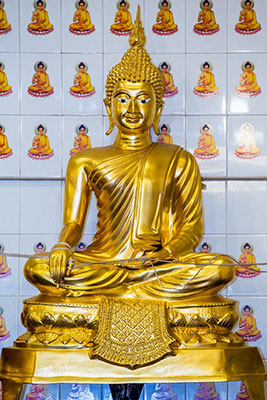
Shakyamuni Buddha

Shakyamuni, he is the founder of Buddhism and also known by the titles Gautama Buddha, Buddha (meaning “Awakened One”), World Honored One and so on. In Buddhism, Shakyamuni is regarded as the most revered being in the world, and his disciples and followers often refer to him as the World Honored One, it means “Sage of the Shakya clan”.

Gautama Siddhārtha

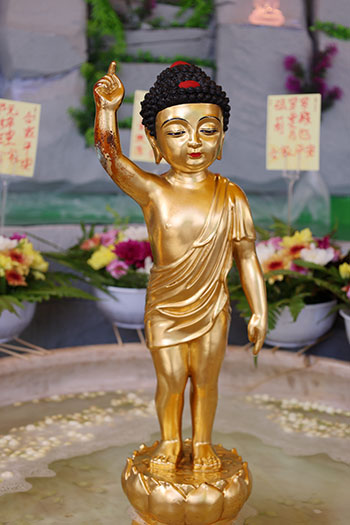
The small Buddha statue standing on the first level of the altar table in the main hall is the image of Buddha when he was a child, with the posture of “pointing to the sky and the earth”. Later generations of Buddhists held a Buddha bathing ceremony (Vesak Day) to celebrate the Buddha’s birthday.
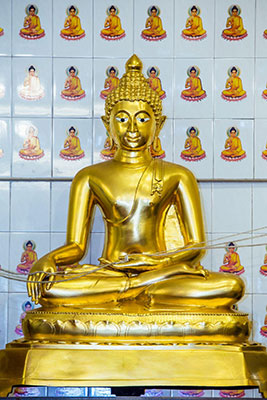
There are three places in Lord Buddha Temple where Shakyamuni Buddha is worshiped in the main hall, the corridor, and the rear hall, each representing different incarnations of the Buddha at various stages of his life. The era of each Buddha image can be identified by their hairstyle and robe.

The Emerald Buddha

The Emerald Buddha (พระแก้วมรกต), known as Phra Kaew Morakot in Thai, is one of the most revered and significant religious artifacts in Thailand and is considered a national treasure.

He is considered the protector of the Thai nation. It is believed to bring prosperity and good fortune to the country. The statue represents the spiritual and political authority of the Thai monarchy. The statue represents the spiritual and political authority of the Thai monarchy.

The Emerald Buddha stands as a powerful symbol of Thai spirituality, culture, and national pride, making it a cherished icon for the people of Thailand.

Circle Hall

Four-Faced Buddha

[wonderplugin_3dcarousel id=1]

Health and Well-being
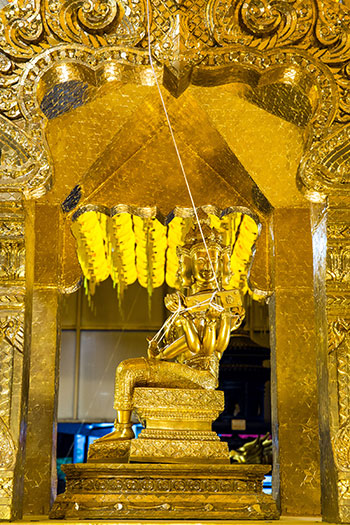
The Four-Faced Buddha holds a scripture in his right hand and a conch shell in his left hand, symbolizing health. The scripture represents wisdom and guidance, signifying the health and peace achieved by practitioners through learning and practicing Buddhist teachings. The conch shell is often associated with spiritual awakening and protection, emphasizing the importance of health on the spiritual journey. Devotees pray to the Four-Faced Buddha for health and tranquillity, seeking blessings for physical vitality and spiritual strength.
Wealth and Prosperity
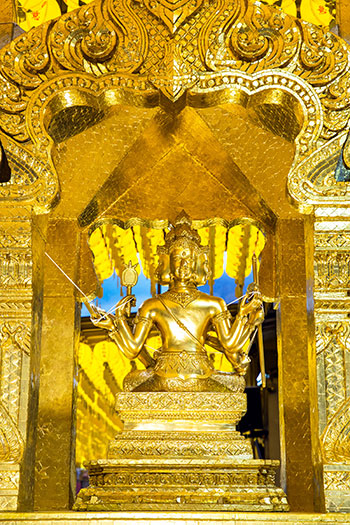
The Four-Faced Buddha holds a mirror in his right hand and a wheel in his left hand, symbolizing blessings of wealth. The mirror represents clarity and insight, reflecting the true situation and helping devotees recognize opportunities and resources for wealth. The wheel symbolizes work and motion, suggesting that the creation and accumulation of wealth require effort and collaboration. Devotees often pray to the Four-Faced Buddha for prosperity and wealth, hoping to achieve success in their careers while also realizing wealth growth through wise choices and hard work.
Love & Relationship
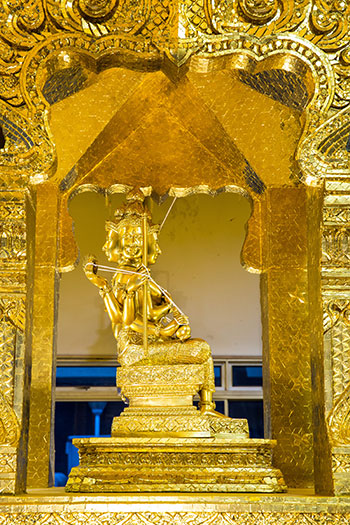
The Four-Faced Buddha, with his right hand holding a purity vase and his left hand holding a sceptre, symbolizes blessings for interpersonal relationships. The purity vase represents harmony, healing, and the nurturing of relationships, while the sceptre signifies authority and the power to resolve conflicts. Devotees often seek blessings from the Four-Faced Buddha to foster good relationships, promote understanding, and ensure peace among friends, family, and colleagues.
Bright Future & Wisdom
The Four-Faced Buddha, with his right hand covering his chest and his left hand holding a string of prayer beads, symbolizes blessings and protection for one’s career and future. The gesture of the right hand represents inner peace and self-reflection, while the prayer beads in the left hand signify ongoing spiritual practice and faith. Devotees seek guidance from the Four-Faced Buddha for success in their careers, protection in their endeavours, and wise decision-making as they move forward.
6

Ganesha

(The Elephant God)

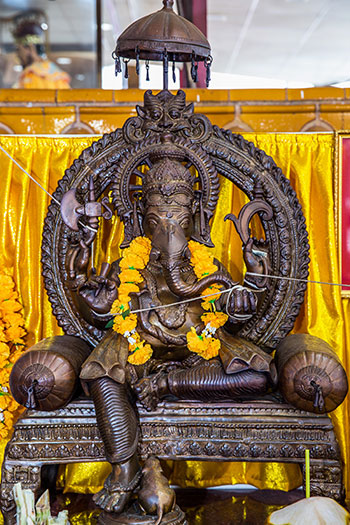
Ganesha, also known as the Elephant God, is one of the most revered deities in Hinduism. Recognizable by his elephant head and human body, Ganesha symbolizes wisdom, prosperity, and the remover of obstacles. He is known as the “Lord of Beginnings,” often invoked at the start of new ventures or rituals for success and good fortune.

Elephant Head – Represents wisdom, memory, and intelligence. Big Ears – Symbolize the importance of listening and humility. Large Belly – Signifies his ability to absorb both the good and bad in life. Trunk – Flexible yet powerful, representing adaptability. One Tusk – Represents overcoming obstacles; legend says he broke one off to use as a writing instrument for the Mahabharata. Mouse (His Vehicle) – Signifies that Ganesha has the power to master the ego and to reach even the smallest of desires or problems.
Ganesha (The Elephant God)

Ganesha, also known as the Elephant God, is one of the most revered deities in Hinduism. Recognizable by his elephant head and human body, Ganesha symbolizes wisdom, prosperity, and the remover of obstacles. He is known as the "Lord of Beginnings," often invoked at the start of new ventures or rituals for success and good fortune.
Elephant Head - Represents wisdom, memory, and intelligence. Big Ears - Symbolize the importance of listening and humility. Large Belly - Signifies his ability to absorb both the good and bad in life. Trunk - Flexible yet powerful, representing adaptability. One Tusk - Represents overcoming obstacles; legend says he broke one off to use as a writing instrument for the Mahabharata. Mouse (His Vehicle) - Signifies that Ganesha has the power to master the ego and to reach even the smallest of desires or problems.

Sang Ka Chai

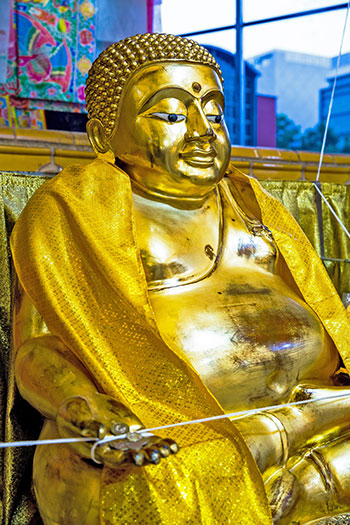
Sang Ka Chai, also known as the Wealth Buddha, is a very famous figure in Thailand and one of the ten principal disciples of the Buddha. He is depicted as chubby with a large belly, representing good fortune and is very beloved. Since the time of the Ayutthaya Kingdom, statues of Sang Ka Chai have been enshrined in every Buddhist temple. Legend has it that during his earthly existence, he had a handsome appearance with skin that shone like gold and resembled the Buddha, which led many celestial beings and ordinary people to regard him as equal to the Buddha. Some celestial maidens were even enamored with his looks and lingered around, which troubled him greatly. To prevent others from mistaking him for the Buddha, he used his divine powers to transform into his current appearance.
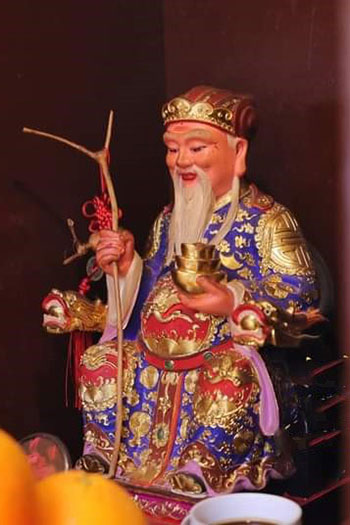
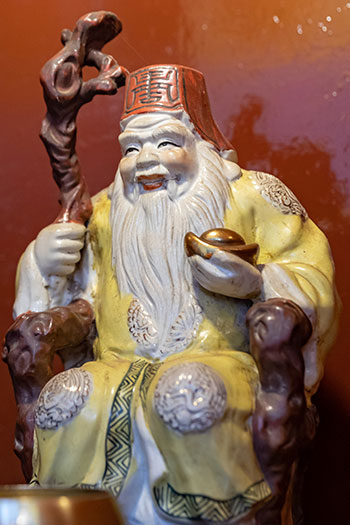
Sang Ka Chai

Sang Ka Chai, also known as the Wealth Buddha, is a very famous figure in Thailand and one of the ten principal disciples of the Buddha. He is depicted as chubby with a large belly, representing good fortune and is very beloved. Since the time of the Ayutthaya Kingdom, statues of Sang Ka Chai have been enshrined in every Buddhist temple. Legend has it that during his earthly existence, he had a handsome appearance with skin that shone like gold and resembled the Buddha, which led many celestial beings and ordinary people to regard him as equal to the Buddha. Some celestial maidens were even enamored with his looks and lingered around, which troubled him greatly. To prevent others from mistaking him for the Buddha, he used his divine powers to transform into his current appearance.
7

Tu Di Gong

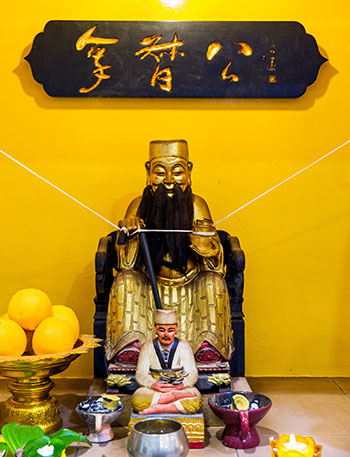
Tu Di Gong (土地公), also known as the Earth God or God of the Land, is a significant deity in Chinese folk religion and Taoism. He is regarded as the guardian of the land and is often worshiped for blessings related to agriculture, home, and overall well-being.

He is typically depicted as an elderly man with a kind face, often wearing traditional Chinese attire. His image might include symbolic items such as a staff or a bowl, representing his authority and benevolence.

Tu Di Gong (土地公), also known as the Earth God or God of the Land, is a significant deity in Chinese folk religion and Taoism. He is regarded as the guardian of the land and is often worshiped for blessings related to agriculture, home, and overall well-being.

He is typically depicted as an elderly man with a kind face, often wearing traditional Chinese attire. His image might include symbolic items such as a staff or a bowl, representing his authority and benevolence.

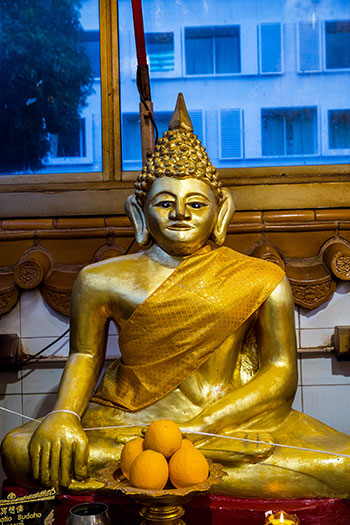
Meditation Buddha

The Buddha statue lacks historical records. It is said to have been created by layman, Lim Chew Hock, the temple’s founder, but its name remains debated, being referred to as either the Suffering Buddha or the Meditating Buddha.

Datuk Gong

Datuk Gong is a deity commonly worshiped in Malaysia and among the Chinese communities in Southeast Asia. This figure is often associated with the spirit of the land or local guardian deities. The worship of Datuk Gong reflects a blend of Chinese folk religion, animism, and local cultural beliefs. He is typically depicted as an elderly man, often wearing traditional attire. In some representations, he may be shown with specific symbols of wealth or prosperity.
Corridor

9

Seven-Day Buddhas

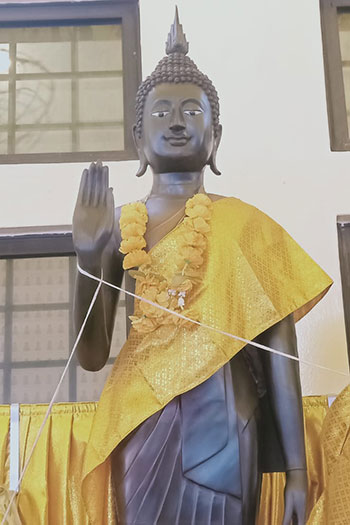
Monday Buddha

This statue is portrayed in an elegant standing posture, with the right hand extended forward in a gesture known as the “Fearless Mudra” in Buddhism. This gesture symbolizes the Buddha’s power to calm fear and offer protection to his followers. It serves as a reminder that, in the face of challenges, fear, or the unknown, we can find inner peace and strength through the Buddha’s guidance. 

The Buddha of Monday is associated with the color Golden Yellow.

Phra Pam Siyati

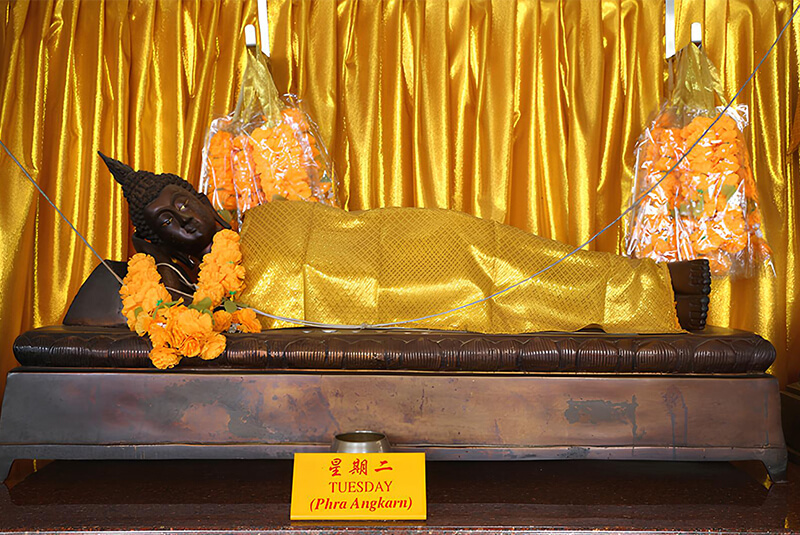
Tuesday Buddha

This statue is depicted in a reclining posture, with the right hand supporting the head and the left arm extended naturally. This position represents the Buddha’s inner peace and tranquillity. Legend has it that the Buddha passed away in this peaceful position, symbolizing the completion and liberation of his spiritual journey. 

The Buddha of Tuesday is associated with the color Soft Pink.

Wednesday Buddha (Daytime)

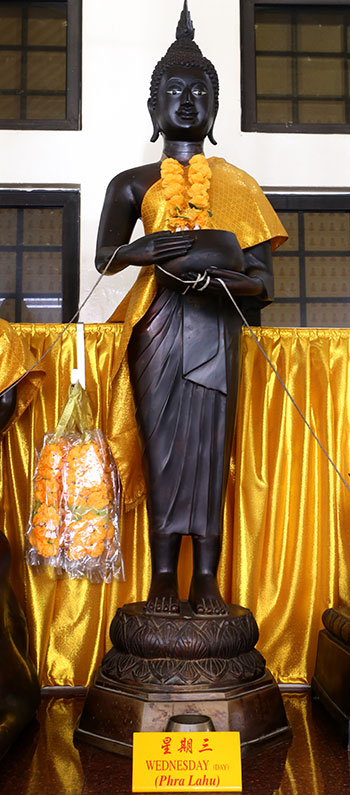
Wednesday Buddha consists of two statues: one representing the day and the other representing the night. Both are associated with the color Forest Green.

The statue representing the day, whose period spans from sunrise to 6 PM. This statue depicts the Buddha going about his life, receiving alms, and spreading the teachings of Buddhism. During his lifetime, the Buddha taught his followers the importance of empathy and helping others, emphasizing the significance of giving and compassion. Through his actions, the Buddha encouraged people to care for those in need, whether offering material support or providing spiritual comfort. It is due to his teachings that his influence remains deeply ingrained in the hearts of people, who continue to honor and respect him today.

Wednesday Buddha (Evening)

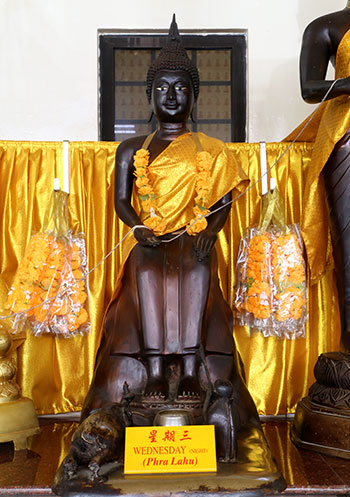
Wednesday Buddha consists of two statues: one representing the day and the other representing the night. Both are associated with the color Forest Green.

The statue representing the night, whose period spans from 6 PM to just before sunrise. The posture of this statue is inspired by the Buddha’s time meditating in the forest. According to legend, the Buddha sat in meditation surrounded by elephants and monkeys. The elephants would bring him water, and the monkeys would offer him honey. This scene illustrates the respect and protection the animals showed the Buddha. It also symbolizes the spirit of peaceful coexistence and respect for nature, as well as the power of selfless help and dedication. The Meditation Buddha encourages us to focus inwardly, to reflect deeply, which in turn helps us better understand ourselves and gain clearer insight into the world around us.

Thursday Buddha

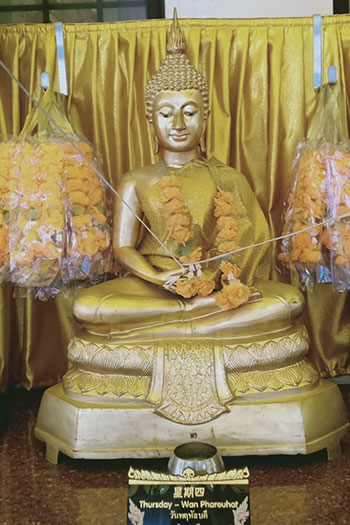
This statue depicts the Buddha in a seated meditation posture, symbolizing deep spiritual cultivation through meditation. It emphasizes the awakening of the mind and the wisdom of non-attachment achieved through stillness and quiet reflection. 

The Buddha of Thursday is associated with the color Saffron Orange.

Friday Buddha

This statue is depicted standing with both hands crossed over the chest, symbolizing contemplation and self-reflection. It emphasizes the importance of gaining wisdom through introspection and studying Buddhist teachings. 

The Buddha of Friday is associated with the color Sky Blue.

Saturday Buddha

This statue is shown seated with a Nāga serpent coiled behind him, forming an umbrella-like shape to protect the Buddha. This image is based on a Buddhist legend that tells how, while meditating under the Bodhi tree, the Nāga King sheltered the Buddha from rain and wind with his body. This symbolizes the protection of the Dharma, helping practitioners to shield themselves from external distractions. Despite the storm, the Buddha remains in meditation, representing the steadfastness of a practitioner on the path, even in adversity.

The Buddha of Saturday is associated with the color Royal Purple.

Sunday Buddha

This statue is depicted standing with both hands naturally crossed in front of the body, representing the tranquility and determination of the Buddha at the moment of enlightenment. This posture symbolizes the Buddha achieving inner completeness at the moment of awakening.

The Buddha of Sunday is associated with the color Ocher Red.

Shakyamuni Buddha

There are three places in Lord Buddha Temple where Shakyamuni Buddha is worshiped in the main hall, the corridor, and the rear hall, each representing different incarnations of the Buddha at various stages of his life. The era of each Buddha image can be identified by their hairstyle and robe.

Phra Chinnaraj

The two Buddhas on the right are Phra Buddha Chinnaraj (referred to as the Success Buddha by the Chinese community as a mark of respect). The other one is located in the rear hall with water dragons behind it.

10

Thai Eminent Monks

Luang Phor Thuad

Luang Pu Thuad is one of Thailand’s most legendary Buddhist monks, particularly influential in southern Thailand and coastal areas. Born in the 16th century, he is widely known for his miraculous abilities and compassionate spirit. Luang Pu Thuad is believed to have the power to perform miracles, such as healing ailments, calming storms, and protecting his followers from harm. His amulets, especially the Luang Pu Thuad amulet, are widely regarded as some of the most powerful in Thai Buddhism and are believed to bring protection and good fortune.

Somdej Phra Puttachan Toh

Somdej Phra Puttachan Toh (สมเด็จโต) is one of the most revered Thai Buddhist monks, known for his deep wisdom, remarkable meditation practices, and spiritual accomplishments. His full name is Somdet Phra Buddhaghosacarya, and he is often referred to as Somdet To or Somdet Phra To. He was the abbot of Wat Rakhang, a famous temple in Bangkok, and was highly respected for his teachings and his role in the preservation of Buddhist traditions.

Somdej Phra Puttachan Toh is particularly known for his wisdom in both the religious and worldly realms. He was an expert in Pali, the ancient language of the Buddhist scriptures, and his teachings were deeply rooted in Buddhist philosophy. He was also well-regarded for his compassionate nature and his ability to guide people toward spiritual enlightenment.

One of the most well-known aspects of Somdet To’s legacy is the creation of powerful and highly revered amulets, particularly the Somdet To amulet, which is believed to bring protection, good fortune, and prosperity to its wearer. These amulets are considered some of the most potent and sought-after in Thai Buddhism, with many followers attributing their success and blessings to the amulet’s power.

Chow Koon Noh

Chow Koon Noh is a respected figure in Thai Buddhism, known for his influence and contributions to spiritual practices, particularly in relation to amulets and sacred objects. He is often regarded as a master in the creation of sacred items that are highly regarded for their reputed protective and beneficial powers. His amulets are believed to provide protection, good fortune, and prosperity to those who carry or wear them.

Chow Koon Noh’s creations are often made following strict ritual practices, which are rooted in Buddhist teachings and sometimes incorporate elements from ancient Thai spiritual traditions. Devotees believe that the blessings and spiritual energy imbued in his amulets can help them overcome obstacles, bring success, and promote well-being.

Luang Phor Phan

Luang Phor Parn (หลวงพ่อพาน) is a well-known and highly respected Thai Buddhist monk. He is especially renowned for his deep meditation practice, spiritual guidance, and his role in teaching and spreading Buddhist teachings. Luang Phor Parn was revered for his wisdom, humility, and dedication to the Buddhist path, which attracted many followers who sought his guidance for spiritual development and inner peace.

He is also widely recognized for creating powerful and revered amulets that are believed to provide protection, prosperity, and good fortune to the wearer. His amulets are considered highly effective, with many followers believing that they help bring about positive changes in their lives.

Luang Por Opasi

Luang Por Opasi is a revered Thai Buddhist monk associated with Wat Asom Baang Mot. He is well-known for his spiritual insight, expertise in meditation, and for crafting amulets that are highly valued for their reputed protective powers. Luang Por Opasi teachings focus on self-discipline, mindfulness, and compassion, encouraging his followers to cultivate these qualities to progress on the spiritual path.

The amulets created by Luang Por Opasi are especially popular among devotees who seek blessings of protection, prosperity, and peace. These sacred objects are made following specific rituals, imbuing them with what followers believe to be powerful energies for warding off negative influences and attracting positive outcomes in life. His amulets have become widely recognized, especially for those looking for spiritual support in times of hardship or for general well-being.

Luang Phor Kasem

Luang Phor Kasem (หลวงพ่อแคสม) is a respected Thai Buddhist monk known for his contributions to the spiritual community and his role in promoting meditation practices. He is especially famous for his teachings on mindfulness, meditation, and the cultivation of inner peace. Luang Phor Kasem was recognized for his calm demeanor, deep wisdom, and ability to guide his followers on the path of meditation and spiritual development. His teachings emphasize the importance of developing mental clarity and practicing meditation to achieve true inner peace and enlightenment. He is also known for the creation of amulets and protective charms that are highly regarded by his followers. These amulets are believed to bring spiritual protection, good fortune, and blessings to those who wear them.

Luang Phor Toh

Luang Phor Tho is a respected Buddhist monk active primarily in central and southern Thailand. He is known for his profound meditation skills and mastery of Buddhist teachings. His teachings emphasize achieving inner peace, wisdom, and liberation through meditation and practicing the Dhamma (Buddha’s teachings). Luang Pu Tho’s guidance focuses on inner cultivation and spiritual growth, and he is widely respected for his amulets and sacred objects, many of which are believed to offer strong protection and bring good fortune to devotees.

Luang Phor Ngang

Luang Phor Ngern (หลวงปู่เงิน) is a highly revered Thai Buddhist monk, widely respected for his contributions to the Buddhist community and his ability to bring blessings such as wealth, prosperity, and protection to his followers. Born in 1810, Luang Pu Ngern served as the abbot of several temples, notably Wat Bang Khlan, where he became renowned for his wisdom, compassion, and spiritual powers.

Luang Pu Ngern’s amulets, especially the Phra Somdej (崇迪佛牌) series, are highly cherished among Thai Buddhists. These amulets are believed to offer powerful protection, attract wealth, improve health, and ensure success in various aspects of life. Due to their rarity and the belief in their powerful spiritual effects, his amulets are considered valuable collectibles and have a deep spiritual significance.

Luang Por Sodh

Luang Por Sodh (หลวงพ่อสด), , also known as Phra Mongkolthepmuni (พระมงคลเทพมุนี), was a highly respected Thai Buddhist monk and meditation master. He is best known for developing and teaching the Dhammakaya meditation method, a profound meditation practice focused on finding inner peace and spiritual awakening by accessing the “center of the body” as a point of focus.

Born in 1884 in Suphanburi, Thailand, Luang Por Sodh founded Wat Paknam Bhasicharoen, a well-known temple in Bangkok. This temple became a major center for meditation and spiritual practice under his guidance. His Dhammakaya meditation technique, which emphasizes reaching deeper levels of concentration and inner tranquility, gained widespread respect and has been passed down through his disciples, continuing to influence Thai Buddhism and meditation practices today.

Kuman Thong

Kuman Thong (กุมารทอง) is a widely revered spiritual figure in Thai culture, believed to possess mysterious powers of protection and good fortune. The worship of Kuman Thong originated in Thai folk beliefs, with devotees seeking blessings for family safety, business success, wealth, and overall good luck. Offerings such as food and toys are commonly given to Kuman Thong as gestures of respect and devotion.

Rear Hall

Three Saints of Saha

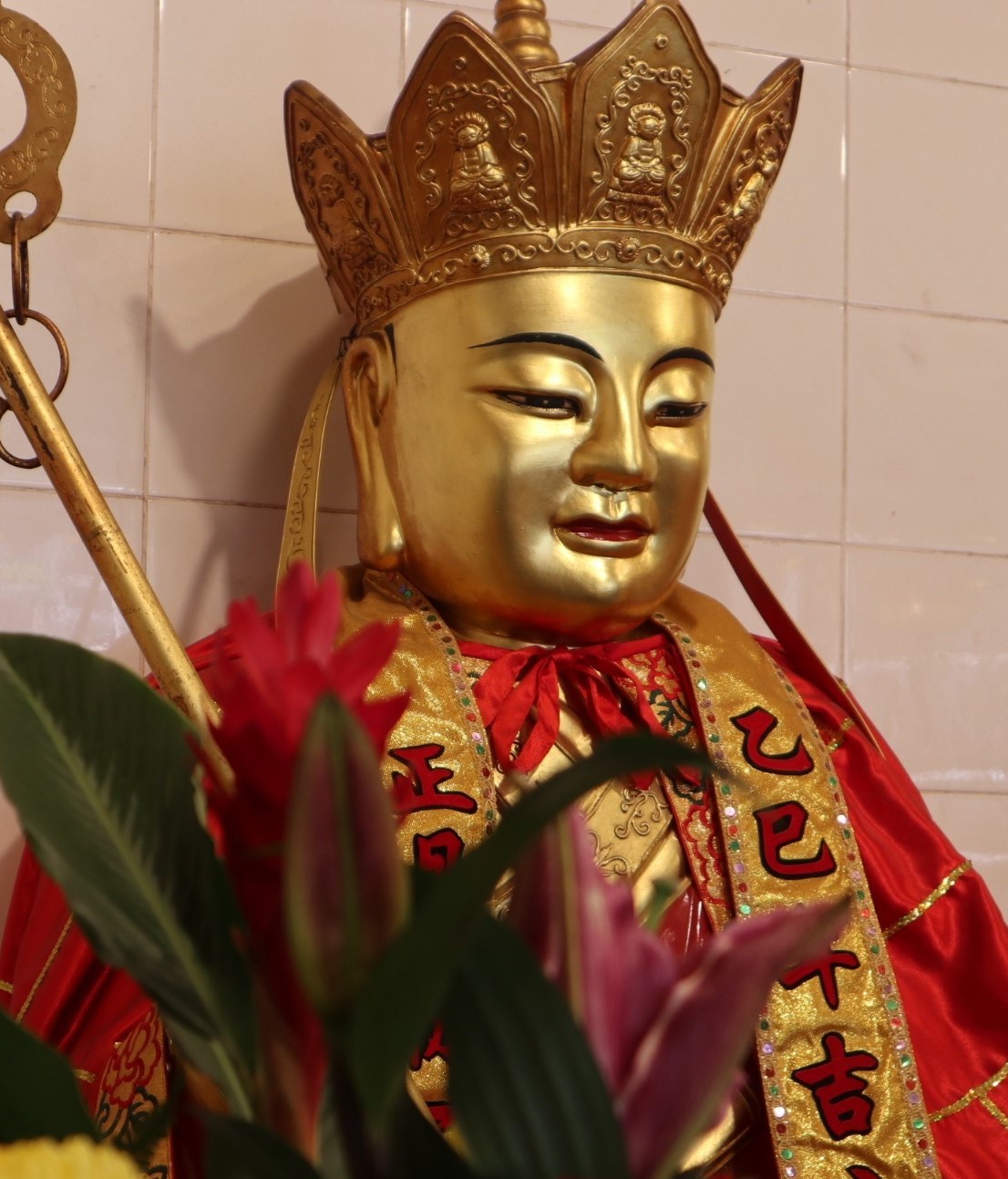
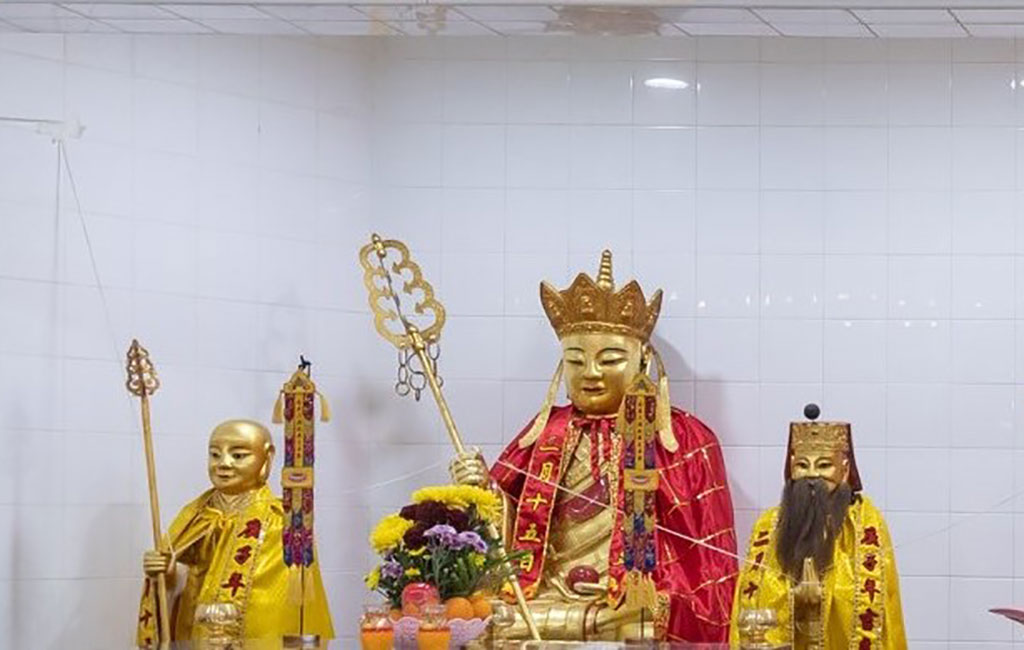
Ksitigarbha Bodhisattva

Kṣitigarbha Bodhisattva is deeply revered by people for his steadfastness and compassion. His name, which means “earth store,” reflects his qualities of “calmly enduring like the great earth, and deeply contemplating like a secret treasure.” He is also honored as the Great Vow Kṣitigarbha Bodhisattva because of his profound vow: “I will not attain Buddhahood until all beings are saved; I will not become a Buddha until the hell is empty.” In popular belief, Kṣitigarbha is often seen as the ruler of the underworld, sometimes referred to as the “Lord of the Underworld” or even considered the superior of Yama, the king of hell. Therefore, during funeral ceremonies, Qingming Festival tomb-sweeping, Ghost Festival rituals, and memorial services, Kṣitigarbha Bodhisattva is frequently worshiped to pray for the salvation of the deceased.

Standing on either side of him are his attendants, Dharma Master Daoming and Dharma Master Minguang.

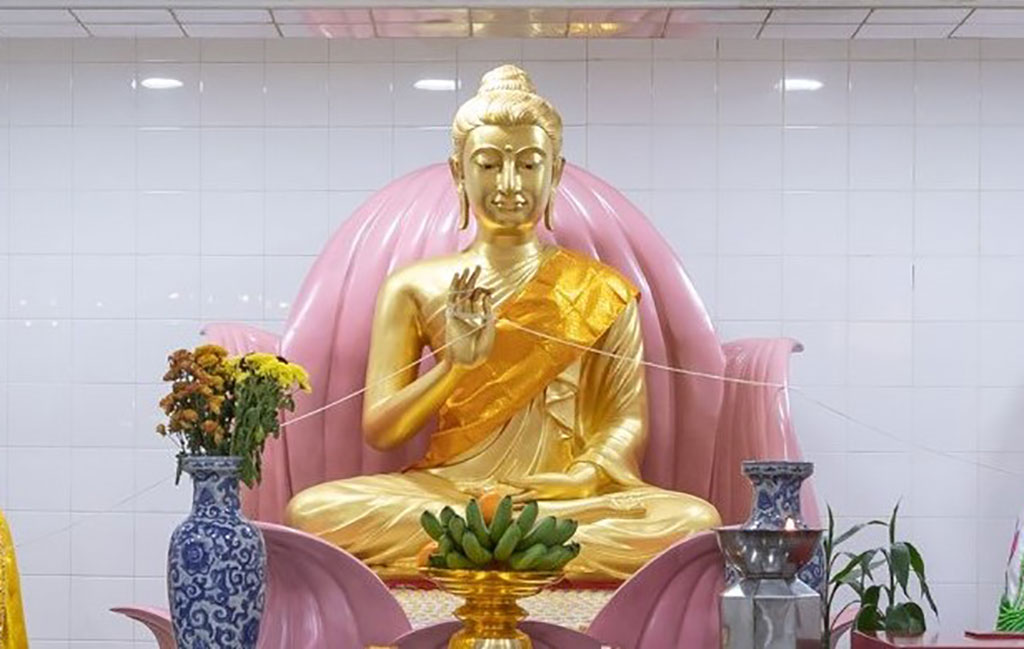
Shakyamuni Buddha

Shakyamuni Buddha, he is the founder of Buddhism and also known by the titles Gautama Buddha, Buddha (meaning “Awakened One”), World Honored One and so on. In Buddhism, Shakyamuni is regarded as the most revered being in the world, and his disciples and followers often refer to him as the World Honored One, it means “Sage of the Shakya clan”.

There are three places in Lord Buddha Temple where Shakyamuni Buddha is worshiped in the main hall, the corridor, and the rear hall, each representing different incarnations of the Buddha at various stages of his life. The era of each Buddha image can be identified by their hairstyle and robe.

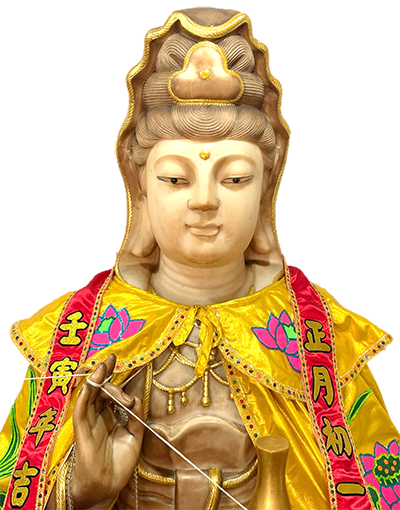
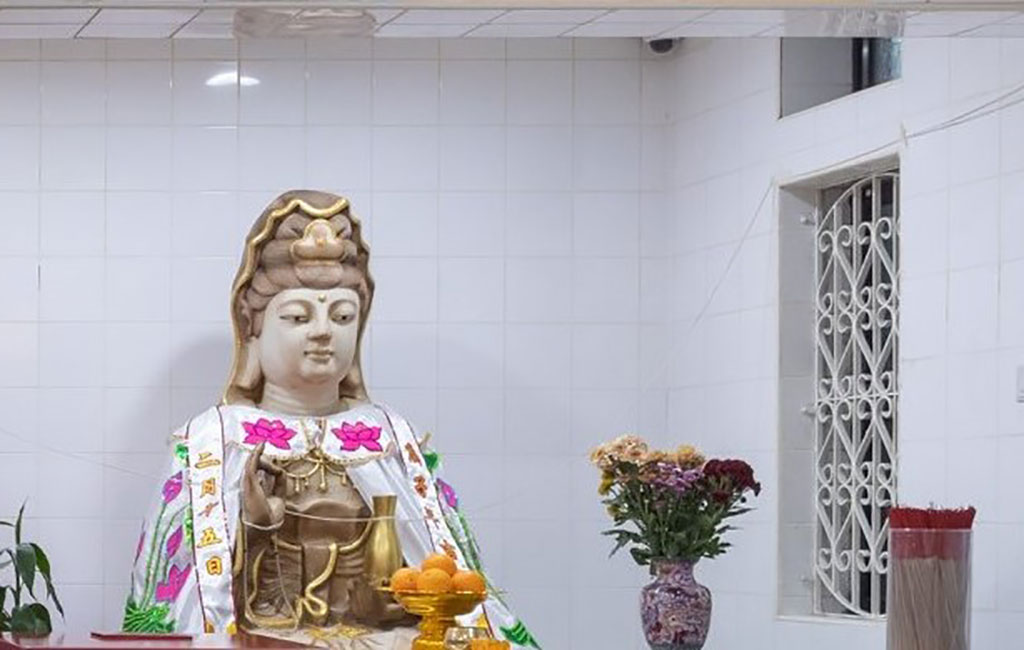
Guanyin Bodhisattva

The image of Guanyin Bodhisattva holding a pure water bottle in her left hand and forming a lotus gesture with her right is a classic depiction of compassion and wisdom. The pure water bottle symbolizes the nectar of compassion, used to purify the karma of all beings and alleviate their suffering. Her right hand, held in a graceful lotus gesture, represents purity and insight, embodying the Bodhisattva’s guiding wisdom to lead sentient beings from suffering to peace.

The lotus gesture is elegant, with the lotus flower symbolizing purity and detachment, as it grows unstained from muddy waters. This reminds followers of Guanyin’s pure and untainted compassion, reaching out to save beings without discrimination. This revered form of Guanyin is often invoked by devotees seeking health, mental clarity, and peace, as it embodies the qualities of mercy and wisdom essential for spiritual guidance and support.

Phra Chinnaraj

Phra Buddha Chinnaraj, commonly translated as Chinnaraj Buddha or Chinnarat Buddha, is referred to as the Success Buddha by the Chinese community as a mark of respect. The Twin Dragon Success Buddha Chinnaraj is one of the most famous and revered Buddha images in Thailand and the world.
The origin of the Success Buddha dates back to 857 CE, around the year 1400 in the Buddhist calendar, during the Sukhothai Kingdom era. The Wat Phra Sri Rattana Mahathat temple in Thailand was constructed during this period, where the earliest discovered image of the Success Buddha was enshrined. In Thai Buddhist belief, the Success Buddha holds an esteemed position and is deeply revered by devotees. Flanking the Success Buddha are protective deities: the monkey god Hanuman and the demon king Thao Wesuwan, along with twin dragon deities symbolizing boundless power.
Throughout history, Chinnaraj has been a deeply trusted Buddha image by devotees, who frequently make wishes to Chinnaraj and often see them fulfilled. Devotees also commonly wear Chinnaraj amulets, believed to ward off evil, provide protection, ensure safety, and aid in career advancement.

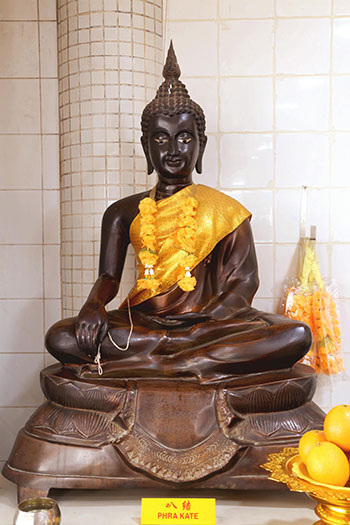
Phra Kate

In Thailand’s tradition of the “Buddha of the Day,” each day of the week is represented by a different Buddha image, symbolizing specific blessings and virtues. For those who are unsure of the weekday they were born, they typically worship Phra Kate as their birthday Buddha. This Buddha image embodies inclusiveness and guidance, believed to bring well-rounded blessings for peace and prosperity in all areas of life.